


Is Safar an Unlucky Month? What Islam Really Teaches
Safar at a Glance
- Safar is the second month of the Islamic calendar.
- Islam does not teach that Safar is an unlucky month.
- The Prophet ﷺ rejected pre-Islamic superstitions surrounding Safar.
- Muslims are encouraged to place their trust in Allah rather than in omens or myths.
- There are no authentic Islamic rulings that prohibit marriage, travel, business, or other major life events during Safar.
- Safar is another opportunity to strengthen your faith through worship, charity, and good deeds.
Quick Answer
No. Safar is not an unlucky month in Islam.
Although some pre-Islamic Arab tribes believed that Safar brought misfortune, illness, or bad luck, the Prophet Muhammad ﷺ rejected these superstitions. Islam teaches that no month, day, or created thing has the power to bring harm or benefit independently of Allah.
Instead of fearing Safar, Muslims are encouraged to place their trust in Allah, continue their worship, and live each day with faith, gratitude, and sincerity.
Introduction
As Muharram comes to an end, many Muslims begin the second month of the Islamic calendar: Safar.
For some, however, Safar is accompanied by questions and uncertainty.
Is Safar an unlucky month?
Should you avoid getting married during Safar?
Is it better to postpone travel or major decisions?
These questions are rooted in beliefs that existed long before Islam. Even today, misconceptions about Safar continue to circulate in some cultures, leading people to associate the month with bad luck or misfortune.
Islam takes a very different approach.
Rather than encouraging fear of particular months, Islam teaches believers to place their trust in Allah alone. The Qur'an reminds us that every blessing and every trial comes by His permission, and the Prophet ﷺ actively corrected the superstitions that surrounded Safar during his lifetime.
Understanding what Islam truly teaches helps us distinguish authentic guidance from cultural traditions that have no basis in the Qur'an or Sunnah.
In this guide, we'll explore what Safar is, where the belief in its "bad luck" originated, what the Prophet ﷺ actually said, and how Muslims should approach this month with confidence, faith, and trust in Allah.
Related Reading: What Should Muslims Do After Muharram?
What Is Safar?
Safar (صَفَر) is the second month of the Islamic (Hijri) calendar, immediately following Muharram and preceding Rabi' al-Awwal.
Like every month in the Islamic calendar, Safar begins with the sighting of the new moon. Because the Hijri calendar follows the lunar cycle, Safar moves approximately 10 to 11 days earlier each year in the Gregorian calendar.
Unlike Muharram, one of Islam's four sacred months, Safar is not designated as a sacred month. However, that does not make it less important. Every month offers Muslims an opportunity to worship Allah, strengthen their faith, and perform righteous deeds.
Throughout Islamic history, Safar has simply been another month in which believers continued their daily lives through prayer, work, family responsibilities, charity, and remembrance of Allah.
What Does the Word "Safar" Mean?
The exact origin of the name Safar has been discussed by Islamic historians and linguists.
One commonly accepted explanation is that the name comes from the Arabic root referring to emptiness. During pre-Islamic Arabia, many homes were left empty because people traveled in search of trade or food after the sacred month of Muharram had ended.
Other scholars suggest the name may relate to the yellowing of the landscape during certain seasons or to military expeditions that commonly took place during this time.
Regardless of the linguistic origin, the name Safar itself carries no religious significance related to luck, fortune, or misfortune.
Is Safar Mentioned in the Qur'an?
The month of Safar is not mentioned by name in the Qur'an.
However, the Qur'an repeatedly teaches an important principle that applies to every day and every month of the year: believers should place their trust in Allah rather than in superstitions or false beliefs.
Allah says:
"And whoever relies upon Allah, then He is sufficient for him. Indeed, Allah will accomplish His purpose."
(Qur'an 65:3)
This verse reminds Muslims that success, hardship, blessings, and trials all occur by Allah's wisdom and decree, not because of a particular month or date.
Where Does Safar Fit in the Islamic Calendar?
Understanding where Safar falls within the Islamic year helps place it in its proper context.
| Islamic Month | Significance |
|---|---|
| Muharram | One of the four sacred months and home to the Day of Ashura. |
| Safar | The second month of the Islamic calendar. No authentic evidence supports claims that it is unlucky. |
| Rabi' al-Awwal | Traditionally recognized as the month in which the Prophet Muhammad ﷺ was born, according to many historical accounts. |
Related Reading: Islamic Calendar 2026
Why Did Some People Believe Safar Was Unlucky?
The belief that Safar is an unlucky month did not begin with Islam. It originated among some pre-Islamic Arab tribes, long before the Prophet Muhammad ﷺ was sent as a messenger.
Like many societies throughout history, people looked for explanations when they experienced illness, loss, hardship, or unexpected events. Over time, some began associating these difficulties with particular months, including Safar.
As these ideas spread, they developed into cultural superstitions rather than beliefs based on revelation.
Some people believed they should avoid:
- Getting married during Safar.
- Beginning a business or major project.
- Traveling long distances.
- Making important life decisions.
Others believed the month itself brought illness, financial loss, or general misfortune.
None of these beliefs have a basis in the Qur'an or the authentic Sunnah.
Islam Replaced Superstition with Tawakkul
One of Islam's greatest contributions was replacing fear and superstition with tawakkul, complete trust and reliance upon Allah.
Rather than teaching believers to fear certain months, Islam teaches that everything happens by Allah's decree.
Allah says:
"No disaster strikes except by permission of Allah. And whoever believes in Allah, He will guide his heart. And Allah is Knowing of all things."
(Qur'an 64:11)
This verse reminds us that hardship and ease are not connected to a particular day, month, or object. They occur only by Allah's wisdom and permission.
Likewise, blessings are not found in superstitions but in sincere faith, righteous deeds, and reliance upon Allah.
What Did the Prophet ﷺ Say About Safar?
The Prophet Muhammad ﷺ directly addressed the false beliefs surrounding Safar.
He said:
"There is no 'Adwa (contagion independent of Allah's will), no Tiyarah (evil omens), no Hamah, and no Safar."
(Sahih al-Bukhari 5757; Sahih Muslim 2220)
Scholars explain that the phrase "no Safar" does not mean the month does not exist. Rather, it rejects the pre-Islamic belief that the month of Safar itself possesses supernatural power to bring bad luck or misfortune.
Imam al-Nawawi رحمه الله explained that this hadith refutes the false belief held during the time of Jahiliyyah that Safar was inherently unlucky. Instead, Muslims are taught that benefit and harm come only through Allah's will.
Trust Allah, Not Superstition
Islam encourages believers to free themselves from fear of omens, unlucky dates, or cultural myths.
Whether it is Safar, a particular day of the week, or any other superstition, the principle remains the same:
Only Allah controls what benefits us and what harms us.
Did You Know?
Superstitions about Safar continue in some cultures today, but they are cultural traditions, not Islamic teachings. Scholars across the major schools of Islamic thought agree that there is no authentic evidence supporting the belief that Safar is an unlucky month.
Can You Get Married, Travel, or Make Important Decisions During Safar?
One of the most common questions about Safar isn't whether the month exists or where the belief came from. It's whether Muslims should avoid important life events during this time.
The simple answer is no.
There is no authentic evidence in the Qur'an or the Sunnah that prohibits marriage, travel, starting a business, moving to a new home, signing a contract, or making other major decisions during Safar.
These ideas stem from cultural customs and pre-Islamic superstitions, not from Islamic teachings.
A Muslim's decisions should be guided by wisdom, sincere consultation, prayer, and trust in Allah, not by fear of a particular month.
Can You Get Married During Safar?
Yes.
Marriage is permissible during Safar, just as it is during any other month of the Islamic calendar.
Some cultures discourage weddings during Safar because of longstanding traditions about bad luck. However, these beliefs have no basis in authentic Islamic teachings.
Marriage is a blessed act of worship that should not be delayed because of superstitions.
If a marriage is right for you, there is nothing in Islam that requires waiting until another month.
Can You Travel During Safar?
Yes.
The Prophet ﷺ traveled throughout different months of the year, and there is no authentic evidence that he instructed Muslims to avoid traveling during Safar.
In fact, Islam encourages believers to place their trust in Allah while taking sensible precautions whenever they travel.
Whether your journey is for work, family, education, Hajj or Umrah preparations, or another lawful purpose, Safar itself is not a reason to postpone your plans.
Can You Start a Business or New Job During Safar?
Yes.
Beginning a new job, opening a business, purchasing a home, signing a contract, or making other important life decisions during Safar is completely permissible.
Success comes from Allah, not from the month in which an event takes place.
Muslims are encouraged to make decisions after careful thought, seeking advice from trusted people, and asking Allah for guidance through Salat al-Istikharah when appropriate.
The outcome of our efforts is always in Allah's hands.
Should You Fear Bad Luck During Safar?
No.
Islam teaches believers to reject the idea that created things possess independent power over our lives.
The Prophet ﷺ removed these fears by teaching that neither Safar nor any other month determines a person's fate.
Instead, Muslims place their trust in Allah while striving to live righteously, make wise decisions, and respond to life's challenges with patience and faith.
As Allah says:
"Say, 'Never will we be struck except by what Allah has decreed for us; He is our Protector.' And upon Allah let the believers rely."
(Qur'an 9:51)
How Should Muslims Spend the Month of Safar?
Safar is not a month to fear. It is a month to live with purpose.
Just like every other month of the Islamic year, Safar offers countless opportunities to strengthen your relationship with Allah through worship, good character, and service to others.
Rather than focusing on superstitions, Muslims are encouraged to focus on the actions that bring them closer to Allah and benefit those around them.
Strengthen Your Trust in Allah
One of the greatest lessons Muslims can take from the discussion surrounding Safar is the importance of tawakkul, placing complete trust in Allah while taking the appropriate means in our daily lives.
Life will always include moments of ease and moments of hardship. Islam teaches that neither is determined by the calendar, but by Allah's wisdom and decree.
Allah says:
"And whoever relies upon Allah, then He is sufficient for him. Indeed, Allah will accomplish His purpose."
(Qur'an 65:3)
Stay Consistent in Your Worship
The end of Muharram does not mean the end of spiritual growth.
Safar is an opportunity to continue the habits you may have built during the Islamic New Year.
Consider making a goal to:
- Pray each salah on time.
- Read a portion of the Qur'an every day.
- Increase your daily dhikr and istighfar.
- Make sincere du'a for yourself and others.
- Fast voluntary fasts when you are able.
- Continue learning about your faith.
The Prophet ﷺ said:
"The most beloved deeds to Allah are those that are consistent, even if they are few."
(Sahih al-Bukhari 6464; Sahih Muslim 783)
Begin the Month with Acts of Kindness
One of the best ways to begin any month is by benefiting others.
Islam encourages believers to care for their families, neighbors, and communities while remembering those facing hardship around the world.
Acts of kindness don't have to be large to be meaningful.
You might:
- Check on a family member or neighbor.
- Visit someone who is sick.
- Share a meal with another family.
- Help someone in financial difficulty.
- Give charity, even if it is a small amount.
- Volunteer your time to serve your community.
Every sincere act performed for the sake of Allah is an opportunity to earn reward.
Continue Giving Charity Throughout the Year
If Muharram inspired you to increase your charity, let Safar be the month you build a lasting habit.
The needs of vulnerable families do not end when a sacred month comes to a close.
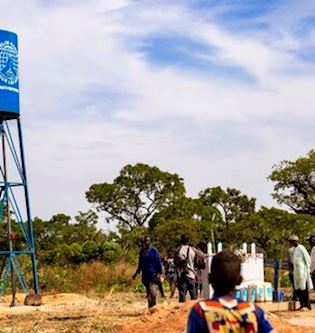
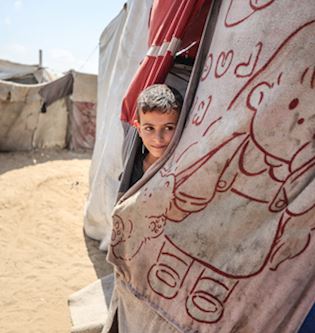
Across the world, millions of people continue to face hunger, poverty, displacement, and limited access to clean water and healthcare. Supporting them is one of the many ways Muslims can put their faith into action.
The Prophet ﷺ said: "The most beloved people to Allah are those who are most beneficial to people."
Continue Making an Impact
The Lasting Lesson of Safar
Perhaps the greatest lesson Safar teaches us is not about the month itself, but about the kind of believer Islam calls us to become.
Rather than living with fear of the unknown, Muslims are encouraged to live with confidence in Allah's wisdom. Rather than delaying opportunities because of superstition, we move forward with sincere intentions, careful planning, and complete trust in our Creator.
Every month brings its own blessings, challenges, and opportunities. What matters is not the name of the month on the calendar, but how we choose to spend it.
Allah reminds us:
"Indeed, Allah does not change the condition of a people until they change what is in themselves."
(Qur'an 13:11)
This verse encourages believers to focus on what they can control: strengthening their faith, improving their character, and striving to do good.
Safar is another opportunity to pray with sincerity, remember Allah often, care for your family, support those in need, and continue the good habits you began in Muharram.
Our success is never determined by a particular month or date. It is determined by our relationship with Allah and our commitment to living according to His guidance.
Every Month Is an Opportunity to Do Good
The Islamic calendar is not a series of lucky and unlucky months. It is a reminder that every new month is another chance to seek Allah's mercy and earn His reward.
Whether through prayer, fasting, reading the Qur'an, showing kindness to others, or giving charity, every sincere action performed for the sake of Allah has lasting value.
Continue Your Journey of Faith
The lessons of Muharram do not end when the month ends, and the arrival of Safar is not a reason to fear the future.
Instead, let it be a reminder to continue growing in faith, strengthening your trust in Allah, and serving others with compassion throughout the year.
Whether you choose to support a family in need, provide clean water, sponsor an orphan, or simply continue a small act of worship each day, every sincere effort brings you closer to Allah and benefits His creation.
Support Sudan Emergency Relief