


Levels of Jannah: How Many Are There? What Is Al-Firdaws?
Levels of Jannah: What Is Jannat al-Firdaws?
Jannah has different levels, or ranks, and Jannatul Firdaus is the highest and best part of Paradise. The Prophet Muhammad (peace be upon him) taught that Paradise has different ranks and encouraged Muslims to ask Allah for Al-Firdaws, the highest of them (Sahih al-Bukhari 2790).
Every Muslim dreams of entering Jannah, a place of everlasting peace, joy, and blessings beyond anything this world can offer. But did you know that Paradise has different ranks?
The Qur'an and authentic Hadith remind us that the believers will not all hold the same rank in Jannah. Among these ranks is Jannatul Firdaus, also known as Jannat al-Firdaws, the highest and most excellent part of Paradise.
The Prophet Muhammad (peace be upon him) said:
"When you ask Allah (for something), ask for Al-Firdaus which is the best and highest part of Paradise."
Sahih al-Bukhari 2790
This beautiful reminder teaches us something important. We should never stop striving to become better Muslims, seeking Allah's forgiveness, strengthening our prayers, and filling our lives with sincere acts of goodness.
But how many levels of Jannah are there? Are there seven levels, eight, or 100? And what does the Qur'an teach us about those who will inherit Jannatul Firdaus?
Let's explore what Islam teaches us about the levels of Jannah, the meaning of Al-Firdaws, and how we can strive for the highest ranks of Paradise through Allah's mercy.
How Many Levels of Jannah Are There in Islam?
Jannah has different levels, or ranks, but the exact total number is not definitively established in the Qur'an and authentic Hadith. What we do know is that Allah has prepared different ranks for the believers, and Jannatul Firdaus is the highest and best part of Paradise.
In Sahih al-Bukhari 2790, the Prophet Muhammad (peace be upon him) described 100 grades of Paradise that Allah has prepared for those who strive in His cause. The Hadith also describes Al-Firdaws as the highest part of Paradise.
This narration confirms the existence of 100 grades, but scholars differ on whether it establishes the total number of levels in Jannah.
Are There 7, 8, or 100 Levels of Jannah?
You may have heard that there are seven levels of Jannah, eight levels, or even 100. These numbers are often confused because Islamic teachings also describe the seven heavens and eight gates of Paradise.
Here is the important distinction:
-
Seven heavens: The Qur'an describes Allah creating seven heavens (Surah Al-Mulk 67:3). These should not automatically be understood as seven levels of Jannah.
-
Eight gates of Jannah: Authentic Hadith describe eight gates through which believers may enter Paradise. These gates are not the same as its ranks.
-
100 grades of Paradise: Sahih al-Bukhari 2790 mentions 100 grades prepared for those striving in Allah's cause, but this does not conclusively establish that Paradise has only 100 levels.
Rather than focusing on a specific number, Muslims are encouraged to strive for the highest ranks of Paradise through faith, righteous deeds, and Allah's mercy.
And among all the blessings of Jannah, there is one place the Prophet Muhammad (peace be upon him) specifically encouraged us to ask Allah for: Jannatul Firdaus.
What Is Jannatul Firdaus? Meaning and Significance
Jannatul Firdaus, also spelled Jannat al-Firdaws, is the highest and best part of Paradise in Islam. It is the place the Prophet Muhammad (peace be upon him) encouraged Muslims to ask Allah for when seeking Jannah.
The word Jannah means garden, while Al-Firdaws is associated with a beautiful, flourishing garden. Together, Jannatul Firdaus refers to the Garden of Paradise.
In Sahih al-Bukhari 2790, the Prophet Muhammad (peace be upon him) encourages believers to ask Allah for Al-Firdaws, describing it as the highest and best part of Paradise.
But the significance of Jannatul Firdaus goes beyond its rank. It reminds us that our greatest hopes should not be limited to the blessings of this world.
Every prayer, sincere act of kindness, and effort to become a better Muslim is an opportunity to seek Allah's pleasure and mercy.
Jannatul Firdaus is a reminder to aim high in our faith, trust in Allah's mercy, and never underestimate the value of sincere good deeds.
What Does the Quran Say About Jannatul Firdaus?
The Quran mentions Al-Firdaws as a reward for those who believe in Allah and live righteous lives. Two passages in particular help us understand the significance of this beautiful part of Paradise.
Surah Al-Kahf (18:107)
Allah says:
"Indeed, those who have believed and done righteous deeds - they will have the Gardens of Paradise as a lodging."
Surah Al-Kahf 18:107
The Arabic verse uses the word Al-Firdaws, connecting this beautiful reward to faith and righteous actions.
This verse reminds us that our relationship with Allah is reflected not only in what we believe, but also in how we live. Our prayers, our kindness toward others, and the good we do all matter.
Surah Al-Mu'minun (23:1–11)
In Surah Al-Mu'minun, Allah describes the qualities of successful believers. These include:
-
Praying with humility and devotion.
-
Turning away from useless speech and actions.
-
Fulfilling their obligation of Zakat.
-
Guarding their chastity.
-
Honoring their trusts and promises.
-
Carefully maintaining their prayers.
Allah then describes their reward:
"Who will inherit al-Firdaus. They will abide therein eternally."
Surah Al-Mu'minun 23:11
These verses offer a powerful reminder that striving for Jannatul Firdaus begins with the choices we make every day.
We may not always perform grand acts of worship, but we can strive to be sincere in our prayers, trustworthy in our relationships, and generous toward those in need.
Above all, we continue seeking Allah's forgiveness and mercy, knowing that our ultimate hope is to enter Paradise through His mercy.
How Can Muslims Strive for Jannatul Firdaus?
Every Muslim hopes to enter Jannatul Firdaus, but how can we work toward the highest level of Jannah?
The Quran and Sunnah encourage us to strengthen our faith, perform righteous deeds, and seek Allah's mercy. While no single action guarantees a place in Al-Firdaws, there are meaningful ways to strive for Allah's pleasure every day.
1. Strengthen Your Salah
Prayer is one of the most important acts of worship in Islam. In Surah Al-Mu'minun (23:1–11), Allah describes successful believers as those who pray with humility and carefully maintain their prayers.
Making Salah a priority, praying sincerely, and working to improve our concentration can help us strengthen our relationship with Allah.
2. Give Zakat and Sadaqah
Charity is an important part of Islamic faith. Zakat is an obligation for eligible Muslims, while Sadaqah allows us to help others voluntarily, seeking Allah's pleasure.
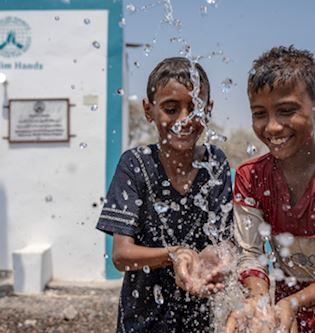
Whether we provide food to a hungry family, support an orphan, or help a community access clean water, sincere charity can become part of our efforts to live a righteous life.
Through Muslim Hands USA, you can turn your intention into meaningful support for families in need.
Support families through your Zakat and Sadaqah.
3. Care for Orphans and Those in Need
The Prophet Muhammad (peace be upon him) taught the importance of caring for orphans.
In Sahih al-Bukhari 6005, he said:
"I and the one who looks after an orphan will be like this in Paradise."
The narration describes the Prophet (peace be upon him) bringing his index and middle fingers together.
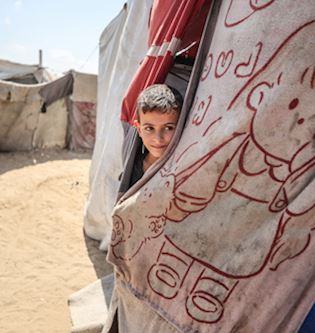
This Hadith highlights the immense virtue of caring for orphans and reminds us that compassion toward vulnerable people is an important part of our faith.
Help provide ongoing care through Muslim Hands USA's Orphan Sponsorship program.
4. Practice Honesty, Patience, and Good Character
Striving for Jannatul Firdaus is not limited to acts of worship. It also includes how we treat the people around us.
Surah Al-Mu'minun reminds believers to honor their trusts and promises. We can put these teachings into practice by speaking truthfully, keeping our commitments, showing patience, and treating others with kindness.
Even when no one is watching, choosing to do what is right is an opportunity to seek Allah's pleasure.
5. Seek Forgiveness and Make Sincere Dua
Every believer makes mistakes, but Allah's mercy is greater than our shortcomings.
We should regularly seek forgiveness, repent sincerely, and ask Allah to guide us toward what is good.
And when making Dua for Paradise, we should remember the Prophet's encouragement to ask for Al-Firdaws, the highest and best part of Jannah.
Ultimately, our hope is not in our deeds alone, but in Allah's mercy. We strive to worship Him sincerely, help others, and become better Muslims while trusting in His compassion.
Dua for Jannatul Firdaus: Asking Allah for Paradise
One of the most beautiful teachings about Jannatul Firdaus is that the Prophet Muhammad (peace be upon him) encouraged Muslims to ask Allah for the highest part of Paradise.
In Sahih al-Bukhari 2790, the Prophet (peace be upon him) said:
"When you ask Allah (for something), ask for Al-Firdaus which is the best and highest part of Paradise."
This Hadith reminds us that we should never hesitate to ask Allah for the greatest blessings of the Hereafter.
How to Make Dua for Jannatul Firdaus
You can ask Allah for Jannatul Firdaus in Arabic or in your own language. A simple supplication is:
Arabic:
اللَّهُمَّ إِنِّي أَسْأَلُكَ الْفِرْدَوْسَ الْأَعْلَى
Transliteration:
Allahumma inni as'aluka al-Firdaws al-A'la.
English meaning:
"O Allah, I ask You for the highest Firdaws."
This is a suggested personal supplication based on the Prophet's encouragement to ask for Al-Firdaws. It should not be presented as an exact Dua narrated from the Prophet Muhammad (peace be upon him).
You can make this Dua during your daily prayers, in sujood, or whenever you turn to Allah in sincere supplication.
As we ask Allah for Jannatul Firdaus, we should also continue striving to earn His pleasure through faith, good character, and righteous deeds.
Are the Eight Gates of Jannah the Same as Its Levels?
No, the eight gates of Jannah are not the same as the levels of Jannah. The gates are entrances to Paradise, while the levels refer to the different ranks within it.
Authentic Hadith describe eight gates of Paradise, including Ar-Rayyan, a gate through which those who fast will enter.
In Sahih al-Bukhari 1896, the Prophet Muhammad (peace be upon him) explained that those who observe fasting will be called through the gate of Ar-Rayyan.
The levels of Jannah, however, refer to the different ranks Allah has prepared for the believers. As mentioned earlier, Jannatul Firdaus is the highest and best part of Paradise.
Understanding this distinction helps clear up a common misconception: eight gates do not mean eight levels of Jannah.
To learn more about the gates of Paradise and their significance, read our guide to the Doors of Jannah.
Frequently Asked Questions About the Levels of Jannah
What Is the Highest Level of Jannah?
Jannatul Firdaus (Al-Firdaws) is the highest and best part of Paradise. The Prophet Muhammad (peace be upon him) encouraged Muslims to ask Allah for Al-Firdaws in Sahih al-Bukhari 2790.
What Is the Lowest Level of Jannah?
The lowest rank in Jannah is still a place of extraordinary blessings. In Sahih Muslim 186a, the Prophet Muhammad (peace be upon him) described the person with the lowest rank in Paradise as receiving blessings equivalent to ten times the world.
This reminds us that even the lowest rank of Jannah is greater than anything we can imagine in this life.
Are There Exactly Seven Levels of Jannah?
There is no definitive evidence establishing that Jannah has exactly seven levels. The Quran mentions seven heavens, while authentic Hadith describe eight gates of Paradise and 100 grades prepared for those striving in Allah's cause.
These descriptions should not be confused with one another.
Will Everyone Have the Same Rank in Jannah?
No. The Quran teaches that people have different ranks according to their deeds. Surah Al-An'am 6:132 states that everyone will have degrees according to what they have done.
Ultimately, entering Paradise depends on Allah's mercy.
How Do You Ask Allah for Jannatul Firdaus?
You can sincerely ask Allah for Al-Firdaws in your own words or through a simple Arabic supplication:
Allahumma inni as'aluka al-Firdaws al-A'la.
Meaning: "O Allah, I ask You for the highest Firdaws."
The Prophet Muhammad (peace be upon him) specifically encouraged believers to ask Allah for Al-Firdaws in Sahih al-Bukhari 2790.
Striving for Jannatul Firdaus Through Faith and Good Deeds
Jannatul Firdaus reminds us that the greatest rewards are not found in this world, but in the Hereafter. Every sincere prayer, act of kindness, and effort to help someone in need is an opportunity to seek Allah's pleasure.
As we ask Allah for the highest level of Jannah, we can also put our faith into action by supporting those facing hardship.
Through Muslim Hands USA, your Sadaqah can help provide food, clean water, and care for vulnerable families.
Make a difference through your Sadaqah. Donate Today
May Allah forgive our shortcomings, accept our good deeds, and grant us and our loved ones Jannatul Firdaus. Ameen.